
We live in a century shaped by loss: of habitats, of species, of ecological certainty.
It is easy to be captivated by the idea of of reversing some of this loss. Of reviving long-lost species and seeing a creature we only know from photographs or fossils step back into the world again.
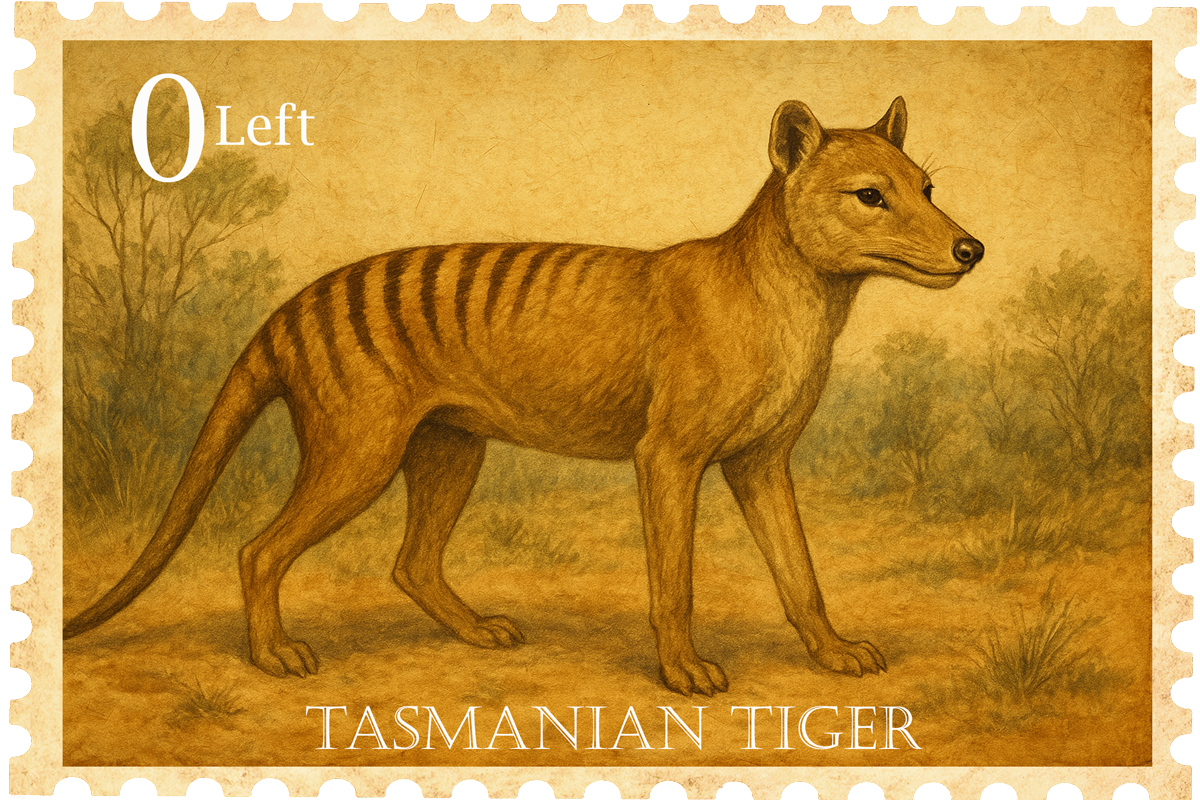
Research institutions and the private company Colossal Biosciences, for instance, use gene editing and cloning to bring back from extinction several charismatic and key-stone species. The thylacine is one of them, a sleek, striped marsupial known as the Tasmanian tiger, which was hunted to extinction in the early 20th century. Old museum specimens and grainy footage is all that’s left.
But our fascination with de-extinction can obscure another truth: de-extinction is not only a scientific project; it is a moral one and the technologies of resurrection tell a story about us, our desires, our guilt, and our sense of power over nature. If we want to understand what it means to “play Jesus,” or to refuse to, we first need to ask what a virtuous relationship with nature looks like in an age of human-caused extinction.
The virtue ethical challenge
Debates about biotechnology typically ask two questions: Can we technically pull it off? Should we, given the costs, risks, and uncertainties? Discussing de-extinction technologies in mitigating the biodiversity crisis is no different, questioning whether a resurrected species is sufficiently similar to the extinct one, and how to balance possibilities and benefits against concerns and costs.
Although this is important, in a recent paper we explore the issue from the position of virtue ethics – acting rightly, at the right time, for the right reasons, and with the right means, based on the right virtues.
Unlike ethical approaches concerned with “what should we do” – questions, well suited for the debates mentioned above – virtue ethics also examines possible human character traits that can either be supporting or undermining a good life, understood as human flourishing in social settings and in relations with the non-human environment. It therefore raises other, usually overlooked, questions including what kind of people are we becoming through the use of these technologies?
The moral challenge of reviving extinct species cannot be settled merely by calculating benefits and costs or appealing to rights and duties. We should also ask whether such interventions express a virtuous relationship with non-human nature.
Love in the face of extinction
The deliberate extinction of the thylacine was not just an ecological loss but also a moral failure. It was a display of vices such as greed, thoughtlessness, and what the Danish philosopher Løgstrup calls shamelessness: the destruction of life as if it did not matter.
Unease about the ongoing biodiversity crisis is not just caused by concern for the future or by solastalgia – the grief for the erosion of the living world and our place within it. It is also caused by feelings of guilt and shame for taking part in the extinction of species, directly or indirectly, both as an individual and as a member of the species that caused the extinctions.
De-extinction projects often draw on these emotions by speaking of righting a wrong, restoring balance or undoing harm. But are such projects a virtuous response? Or do they soothe our individual and collective experiences of fear, solastalgia, and guilt by seeking to control nature, by reaffirming the vices that caused the experiences?
We propose that the guiding virtue in our relationship with nature ought to be love, understood as a combination of respect and care. Respect in this context should be construed as non-interference: acknowledging the independence and “otherness” of nature, allowing species and ecosystems to unfold their own evolutionary paths. Care, by contrast, should be construed as intervention: acting compassionately when human-caused harms threaten the flourishing of others.
Love is a virtuous approach to our lives with, in, by, of and against nature, combining humility with responsibility. Sometimes love demands restraint – stepping back to let life continue unshaped by human will. Sometimes it demands engagement – acting to repair damage we have caused. The difficulty lies in knowing which is which.
Reviving the thylacine is in this perspective not automatically virtuous or vicious. It depends on motivation, methods, and results: Is it done to satisfy curiosity or to demonstrate power – or is it a genuine effort heal a wound inflicted by humans, with care and humility? If so, is it virtuous to heal the wound in this way?
Respecting wildness
One of our deepest concerns about de-extinction projects is that they risk eroding the wildness of nature. In the context of virtue ethics, wildness is less about pristine landscapes and more about the degree to which other beings can live according to their own ways, free from human designs. It signifies autonomy: that non-human nature exists for us to participate in but not control. Even if a gene-edited thylacine looked and behaved like the original, we would always know that it was a product of human ingenuity.
This matters because wildness is not a property of nature but of our relationship with it, and this knowledge may undermine the sense of wonder and humility that is at the core of ethical coexistence. Losing relational wildness is not a biological loss but a moral one: it subtly changes how we meet the more-than-human world and how we understand our place within it.
At the same time, not every non-interference is virtuous. If humans caused the extinction, doing nothing may express apathy and carelessness. Love for nature may require interventions like restoring habitats, reintroducing displaced species or employing technology to prevent further harm.
The messy realities of de-extinction
While the idea of reviving a lost species can feel poetic, the practical reality is far messier. From a virtue ethics perspective, reviving the thylacine raises three key concerns.
Care for animals: De-extinction would involve cloning, gene editing and the use of surrogate mothers from other species causing suffering such as deformities, stress and failed pregnancies. Further, the animals would come into a world with no social group providing belonging and teaching them how to live. The individual animals become mere means to reach our goals, expressing callousness, not compassion.
Ecological prudence: Ecosystems have changed since the thylacine’s disappearance. Its niche may no longer exist, and reintroduction could disrupt existing balances. Resources would be better spent protecting the species we still have, rather than resurrecting extinct species to a world with no remaining place for them.
Virtuous motives: The desire to bring back extinct species can express noble intentions, but it can also be a mask for arrogance and moral vanity. Is the motivation genuine love for the species or a wish to showcase human mastery and redeem shared guilt? Arguably, the virtuous response would be to accept guilt and atone by protecting existing species.
Humility in the Anthropocene
What does it mean to love nature in a time of loss?
In virtue ethics, love for nature is not a simple choice between stepping back or stepping in. It is the ongoing task of knowing which response expresses the right balance of respect and care. In the Anthropocene, human influence pervades every ecosystem and the distinction between “natural” and “artificial” is fading. Because our reach is so great, awe of nature and, growing from that, expressing love of nature in balanced way is becoming more urgent.
Faced with extinction – especially extinctions of our own making – it is tempting to leap straight into action, to repair the wound before we have fully faced what was lost. But we must accept that not all wounds can – or should – be healed by human hands.
De-extinction may be virtuous if it truly serves the flourishing of life rather than human pride, but usually the virtuous act is to accept loss, to mourn, and to change the ways of life that caused the loss in the first place. Sometimes love for nature looks less like resurrection and more like repentance.
- Bjørn K. Myskja is a professor of ethics and political philosophy at the Norwegian University of Science and Technology. His research interests include ethics in the Kantian and Aristotelian traditions, bioethics, ethics of technology and animal ethics.
- Mickey Gjerris, a theologian with a PhD in bioethics, is an associate professor at the Faculty of Science at the University of Copenhagen, focusing on the ethics of human–nature relationships. He writes and lectures widely on ethics and philosophy of life, and maintains that the miracle of existence is best met by hugging a tree.
- The paper Playing Jesus to Save Species: A Virtue Ethics Approach to Biotech De-Extinction Projects is available here.